
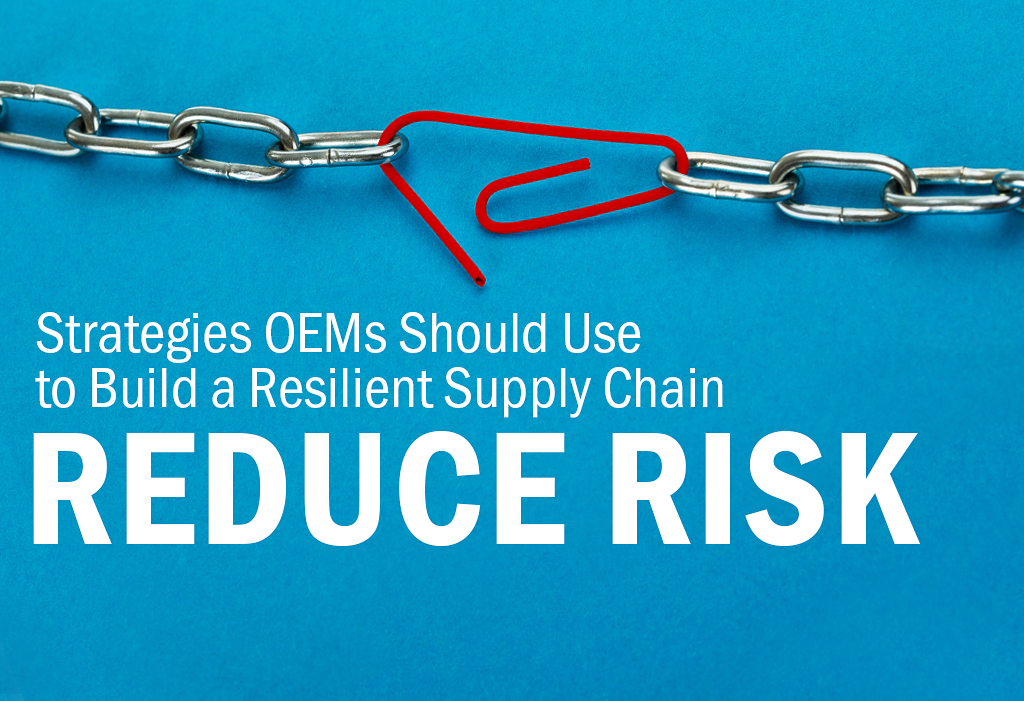
This blog explores proven tactics OEMs can use to reduce supplier risk, protect production continuity, and improve supply chain resilience.
1. Know Your Supplier Landscape
Before contracts are signed or orders placed, understanding the supplier network is critical.
Use tools like the Kraljic Matrix to segment suppliers based on risk and impact. This approach helps you:
- Identify high-impact, high-risk suppliers
- Prioritize where mitigation strategies are most needed
- Tailor sourcing tactics to supplier category
This kind of segmentation prevents blind spots and focuses procurement efforts where they matter most.
2. Diversify by Product Category — Not Critical Components
Diversification is a common risk-management strategy in procurement, but it doesn’t always mean splitting production of the same component across multiple suppliers.
For engineered components like adjustable desk frames, consistency in fabrication, assembly, and testing is critical. Using multiple manufacturers for the same structural component can introduce variability in tolerances, finishes, and long-term performance.
Instead, many OEMs manage risk by diversifying across product categories rather than splitting the same component across multiple suppliers.
For example, a furniture brand may work with:
- One specialized manufacturer for height-adjustable and fixed table bases
- Another supplier for seating
- Another for storage or casegoods
This approach allows each supplier to focus on what they do best while maintaining consistency within each product category.
For metal-intensive components like desk bases, working with a manufacturer that specializes in precision steel fabrication and structural frames can reduce risk by ensuring consistent engineering, manufacturing standards, and quality across product lines.
3. Look for Manufacturing Redundancy Within the Supplier
Another way to reduce sourcing risk is to evaluate how resilient the supplier’s own manufacturing operations are.
Rather than relying on multiple suppliers for the same product, many OEMs reduce risk by partnering with manufacturers that have strong internal capabilities and production infrastructure.
Key indicators include:
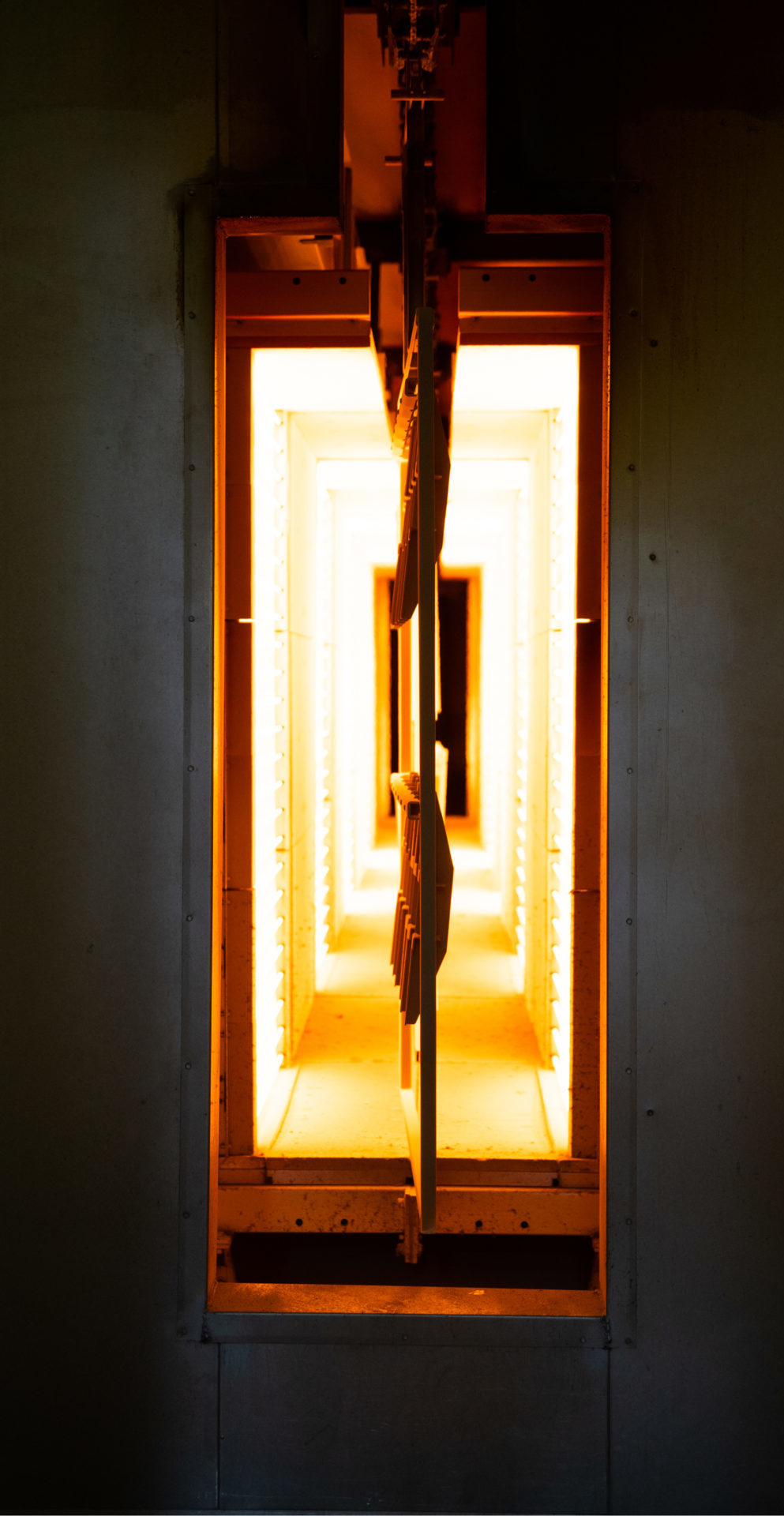
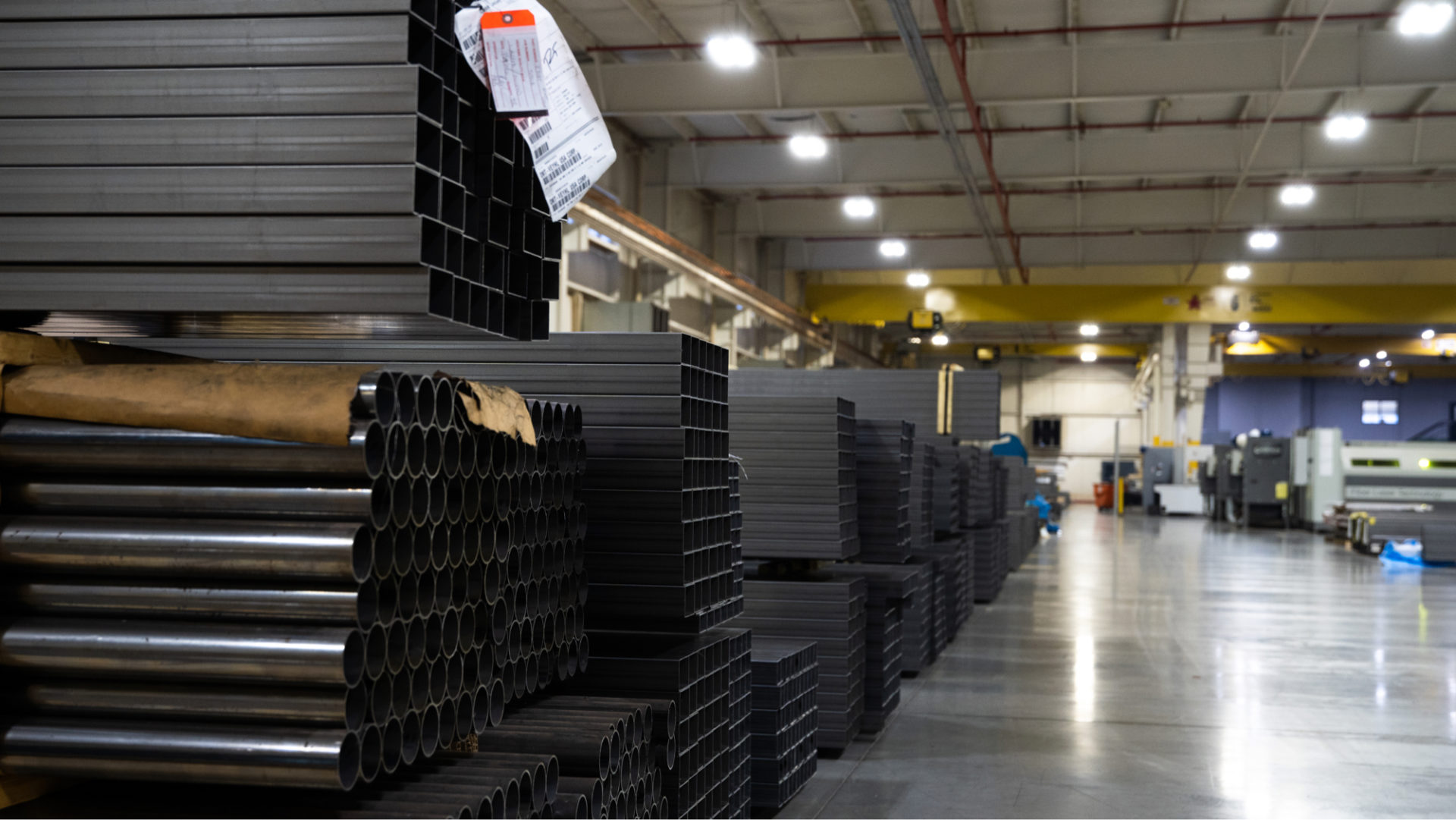
- Vertical integration in fabrication processes such as laser cutting, forming, welding, and powder coating
- Domestic manufacturing capacity that reduces shipping and logistics risk
- Scalable production lines capable of supporting volume growth
- Engineering and testing resources to validate performance and durability
When a manufacturer handles most of the production process internally, there are fewer external dependencies that could disrupt the supply chain.
For structural components like adjustable desk frames, this type of vertically integrated manufacturing can improve:
- Quality consistency
- Lead time predictability
- Engineering collaboration
- Production scalability
It also allows OEMs to work more closely with their supplier when developing new products or expanding production.
4. Collaborate Early, Not Just When Problems Arise
Treat suppliers as partners, not just vendors.
Long-term collaboration allows you to:
- Co-develop specifications
- Share forecasts and demand plans
- Coordinate risk assessments
- Unlock process improvements together
Strong relationships often result in better prioritization during shortages and faster problem resolution when issues arise.
5. Consider Nearshore / Domestic Alternatives
Tariffs and trade policy shifts are rewriting the cost equation for offshore sourcing. For example, tariff increases on Chinese imports of metal components have raised production costs by 15–25% for furniture components.
Nearshoring, especially for heavy metal components like desk frames, offers:
- Shorter lead times
- Lower logistics complexity
- Quicker quality feedback loops
- Greater supply chain visibility
Conclusion — Risk Is Strategic, Not Accidental
Sourcing adjustable desk frames isn’t just about finding a supplier. It’s about choosing a manufacturing partner that supports your product strategy, production stability, and long-term growth.
For OEMs, reducing sourcing risk often comes down to a few key factors: working with manufacturers that specialize in structural metal fabrication, maintaining consistent engineering and quality standards, and partnering with companies that have the infrastructure to support production at scale.
When a supplier brings together engineering support, precision steel fabrication, and integrated manufacturing processes, OEMs gain more than a component — they gain a reliable foundation for their product line.
At OMT-Veyhl, our focus is exactly that. As a Michigan-based manufacturer specializing in metal fabrication and table base systems, we work closely with OEM partners to produce both fixed-height and height-adjustable bases designed for durability, consistency, and scalable production. By keeping critical fabrication processes in-house and engineering products for commercial performance, we help our partners reduce uncertainty and bring dependable furniture solutions to market.
In today’s environment, a resilient supply chain starts with the right manufacturing partner.
Recent Comments